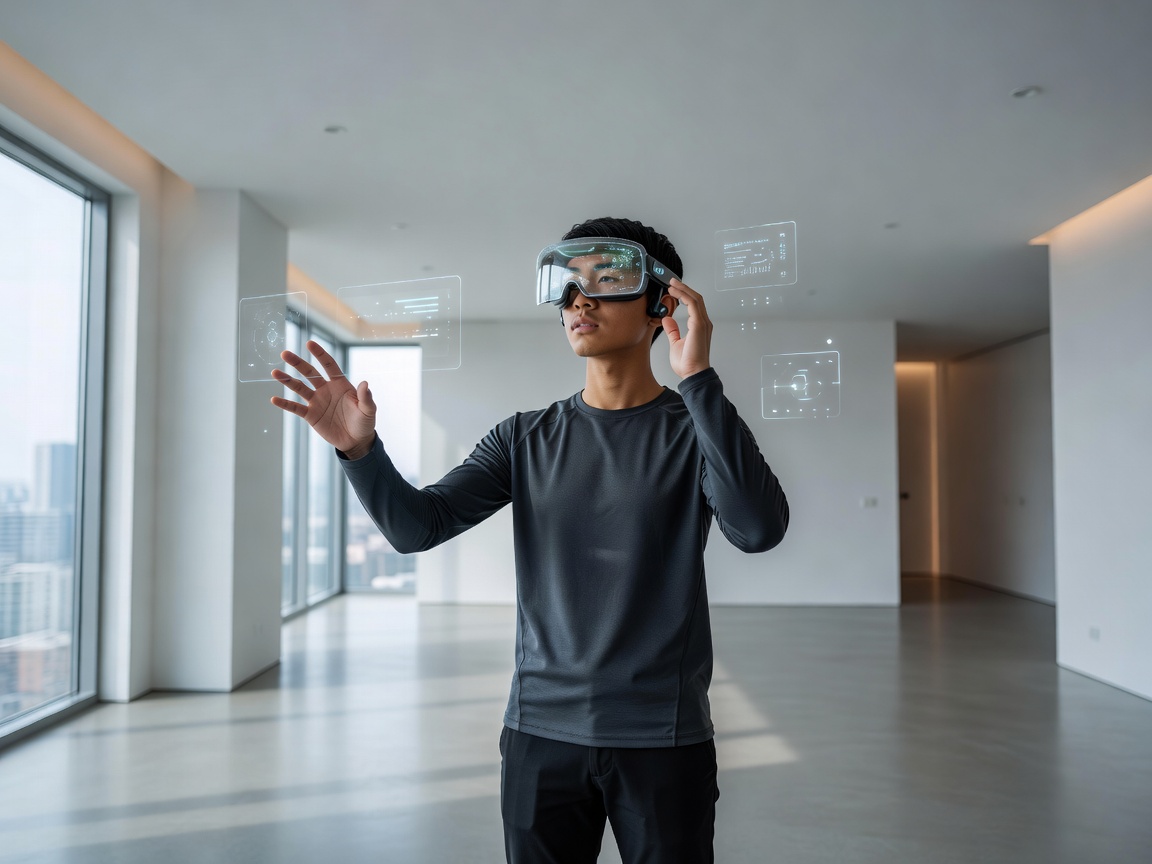
The transition from planar, screen-bound computing to spatial computing represents one of the most significant shifts in human-computer interaction since the advent of the graphical user interface. By anchoring digital assets in physical space via high-fidelity sensors and displays, spatial computing dissolves the physical borders of traditional monitors.
Passthrough Mixed Reality: The New Baseline
Historically, augmented reality (AR) relied on optical see-through displays—projects like Microsoft's HoloLens or Magic Leap. These systems project light into the user's eyes while allowing environmental light to pass through a transparent visor. However, limitations in field of view (FOV), brightness, and color opacity have restricted their mainstream viability.
The contemporary industry standard has pivoted sharply toward high-resolution video passthrough mixed reality (MR). Devices such as the Apple Vision Pro and Meta Quest 3 utilize external camera arrays to capture the environment, processing the video feed in milliseconds, and re-rendering it on internal OLED or LCD microdisplays.
Pros of Video Passthrough
- Opaque Overlays: Digital objects can completely occlude physical ones, allowing for true shadows and solid forms that optical see-through cannot achieve.
- Variable Immersion: Users can dial their experience from full virtual reality (VR) to mixed reality seamlessly using hardware dials or software toggles.
- Wider FOV: Micro-OLED screens coupled with pancake lenses offer significantly wider fields of view compared to waveguide optics.
Cons of Video Passthrough
- Photon-to-Photon Latency: Any delay between physical movement and visual update can cause motion sickness. Processing must remain consistently under 12 milliseconds.
- Dynamic Range: Cameras struggle in extreme low-light or overly bright environments, often washing out the user's view of the physical world.
- Vergence-Accommodation Conflict: Most current headsets have a fixed focal distance, causing eye strain when users focus on objects rendered virtually close to them.
Operating System Paradigms
Hardware is only half the spatial equation; the operating system defines the interaction model. The industry is currently divided into two primary interaction paradigms:
Eye-and-Hand Tracking (The Apple Approach): Apple’s visionOS leans heavily into multimodal inputs combining precise eye tracking (using internal IR cameras) with subtle hand gestures (like the pinch). This eliminates the need for external controllers, presenting a highly accessible, minimalist interface that feels telepathic. However, the lack of haptic feedback can complicate precision tasks like virtual typing or complex 3D modeling.
Controller-First with Hand Fallback (The Meta Approach): The Meta Horizon OS utilizes tracked controllers that provide essential haptic feedback, making it vastly superior for gaming, industrial simulations, and complex spatial manipulation. While hand-tracking is supported and constantly improving via computer vision updates, the OS still defaults to controllers for tasks requiring precision.
Compute Requirements & Enterprise Adoption
To sustain spatial computing at high frame rates, custom silicon is essential. Processing dual 4K displays at 90Hz+ while simultaneously mapping the room with LiDAR and tracking skeletal hand movements requires immense bandwidth. Enterprise applications—such as surgical planning, architectural visualization, and remote mechanical assistance—demand this level of fidelity to ensure safety and accuracy.
We are observing a trend where spatial computing is moving out of the consumer novelty phase and into robust enterprise integration. Companies are leveraging spatial anchors to attach persistent digital manuals to physical machinery, bridging the knowledge gap for frontline workers.